Cereal Offenders: The Real Story Behind Our Shelves
Steve McCrossan, Executive Director
At NourishNC, we sometimes receive feedback from community members about the food we provide for our kids and their families, often focusing on concern around processed foods.
Here’s the thing: I usually agree with them, but that doesn’t mean we are going to stop offering those items – yes, even that “sugary cereal.”
We love that folks are invested in our families’ well-being and we agree that nutritious food matters. However, this type of feedback can sometimes come from a place of privilege or a lack of understanding of the real challenges our families experience.
So why are we digging in on this? First, let’s talk about these terms.
Food Security vs. Nutritional Security
Put simply: food security asks, “Do families have enough to eat?” Nutrition security asks, “Do families have access to the kind of food that helps them thrive?” That distinction matters for NourishNC.
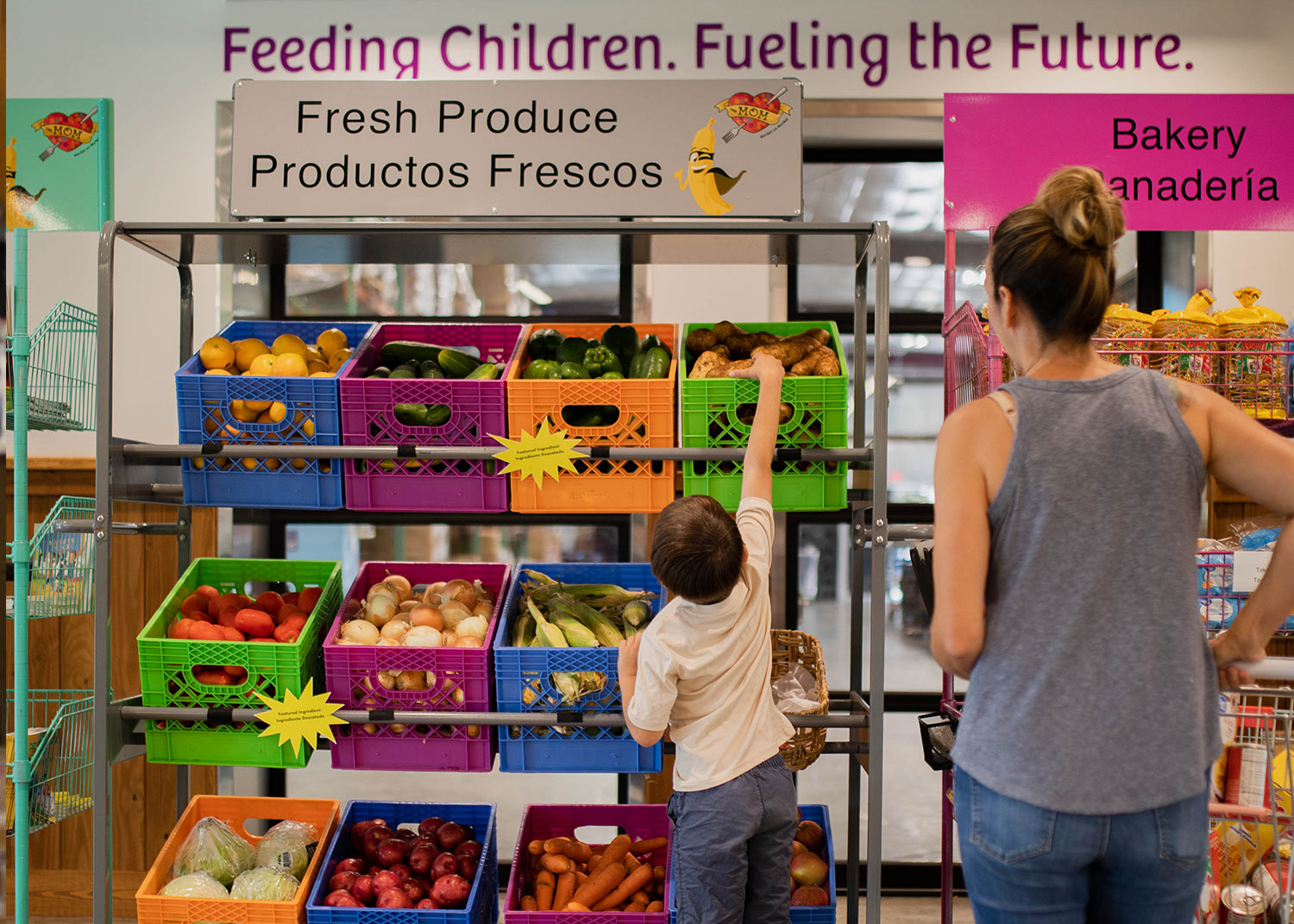
Through our Market on Market (MoM) program, we are working to provide families with dignified access to fresh produce, nutritious options, and the kinds of foods that support children’s health, growth, and learning.
Meeting Families Where They Are
The 1,900 families we serve a year exist on a spectrum between these two terms above. These families are not all experiencing food insecurity in the same way: some are in crisis and need enough food to get through the week, while others are working toward healthier choices but face real barriers getting there.
The aforementioned community feedback doesn’t take into account where our families are on that spectrum, or their existing dietary habits, income level, lived experience, health education, cooking ability, transportation, schedules, access to cooking facilities, etc. It takes real time and resources for people to learn and incorporate new foods into their lives.
So, we start by meeting our families where they are (food-insecure) and then try to nudge them towards other choices (nutritionally secure). That often starts by making sure they walk into a market that offers products they enjoy and recognize, regardless of what you or I think of those products.
Autonomy & Dignity Matter
Families deserve autonomy in making choices for themselves and their children. Telling people what they “should” eat can be paternalistic, culturally insensitive, and disconnected from the realities of their lives. That matters deeply in the context of food insecurity, where families may already be experiencing stress, judgment, or a loss of control.
Offering choice provides dignity. It says, “You know your family best.”
Cookies Make Cents (even if you don’t think so)
Parents often do their best to make sound economic choices, even when those choices may look less-than-nutritious from the outside. Research shows that children often need repeated exposure to new fruits and vegetables before they accept or enjoy them. Some guidance suggests 10–15 tries, and broader research supports repeated exposure as an effective strategy for increasing acceptance of fruits and vegetables.
Now imagine you are a parent with limited money and limited margin for waste. You can buy a $4 bag of cookies or a $4 pineapple. The cookies may not be the most “nutritious” choice, but they are the safer economic choice: you know your kids will eat them. The pineapple is a risky purchase because your child may not eat it, you may not know how to cut it, or how to tell if it’s ripe.
Let’s Fail a Lot
This is why I often refer to our produce section as “our opportunity to fail 11-14 times.” Our families can repeatedly expose their children to new items without economic consequence.
This concept applies across all sections in our market where there are “healthier” choices. Fresh, whole foods and minimally processed options are always available in our markets. We understand that not every family will embrace them right away. That’s okay! Each time a family takes a bag of fresh produce, it’s a win. When they reach for yogurt or whole oats at breakfast, rather than that box of “processed cereal”, it’s another step forward.
What You Can Do
Healthy food advocates, we welcome your help! Consider donating “less sugary” cereals or granola, whole grains, low salt and sugar foods, etc. Cash donations are particularly helpful as they allow us to keep our fresh produce and whole-food options well stocked.
We invite anyone who cares about healthy food choices to come by, see our shelves, and understand what this journey looks like. Change takes time, but together, we’re making it possible.
In the meantime, we’ll continue providing food that meets our families where they are today and, with your support, nudging them toward nutritional security tomorrow.